Week 35: Communion
- Key verses: John 6:53; 1 Corinthians 11:23-26
- Ties to the Passover
- What is the right way?
- Passover feast to communion
- Parting thoughts
Key verses
John 6:53 (NLT)
Jesus replied, “I am the bread of life. Whoever comes to me will never be hungry again. Whoever believes in me will never be thirsty.”
1 Corinthians 11:23-26 (NLT)
For I pass on to you what I received from the Lord himself. On the night when he was betrayed, the Lord Jesus took some bread and gave thanks to God for it. Then he broke it in pieces and said, “This is my body, which is given for you. Do this in remembrance of me.” In the same way, he took the cup of wine after supper, saying, “This cup is the new covenant between God and his people—an agreement confirmed with my blood. Do this in remembrance of me as often as you drink it.” For every time you eat this bread and drink this cup, you are announcing the Lord’s death until he comes again.
Ties to the Passover
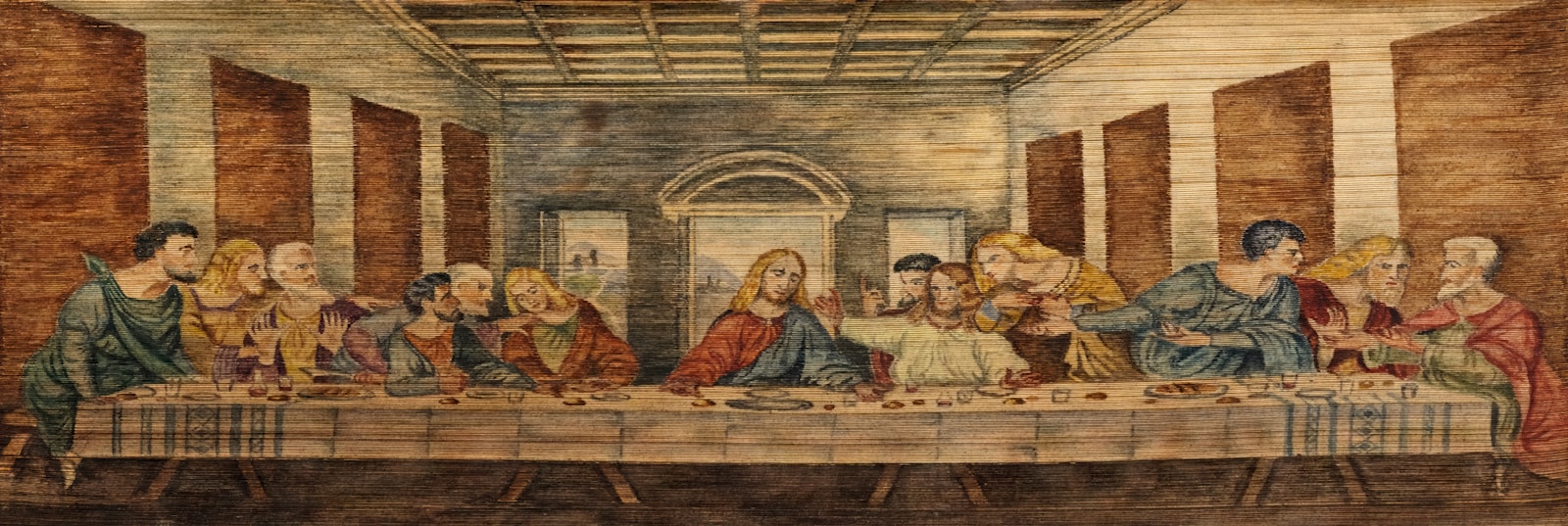
This week we read the original Passover story in Exodus 12-13. Jesus and his disciples were celebrating the Passover meal during his last supper. They were following the traditions passed down through the generations when Jesus being the creator of the Passover upended those traditions.
Jesus is the Lamb of God. He replaced the sacrificial lamb. His perfect, holy blood was smeared on cross. No longer do we need to put blood on the doorframe because Christ declared “it is finished!”
He then reframed wine and bread as his blood and body. This is the source of much contention throughout church history. Jesus didn’t subscribe something special to the elements beyond the words he spoke. No miracles are recorded during the supper. He said to remember him when we do this.
What is the right way?
That’s the big question. Jesus references a distinct Jewish tradition passed down over thousands of years originally mandated by God himself. As I mentioned above, Jesus shook things up when called out the bread and wine as being his body and blood. He told us to do this to remember him.
So then, what’s the fuss about?
- How often should we do it?
- Is it only wine and unleavened bread?
- One shared cup or many?
- Does it miraculously turn into his actual body and blood?
- Is supposed to be a meal?
- Who can participate?
As you can see, thoughts, traditions, and theology have been comingled over the years. I participated in a variety of ways through the years.
Passover feast to communion
Let’s get back to the basics. Jesus used wine and bread based on their significance to the Jews at the table. During an annual meal. Think about that for a moment. In context, this would be a big deal once a year around a meal in our house with family and friends. Maybe we should consider this. It would be celebrated on Good Friday each year. I would argue this what he intended.
The early church started celebrating the Lord’s Supper every Sunday with a meal. It got so screwed up that Paul had to lay out specific instructions in his letter to the Corinthians. The big changes were that a full meal was not recommended and that believers should be right with God and fellow believers before partaking. So, Paul was giving specific instructions to believers to prevent abuse.
Fast forward to today, the typical American church serves a small cup of juice and a tiny cracker. Some do it weekly, monthly, or quarterly. Regardless, it is very different from Jesus did during his last Passover meal. However, we do it, the key teaching from Paul and Jesus is to remember what Jesus did for us. The rest is tradition.
The details are tradition, but the purpose is theology.
Parting thoughts
I find it sad that the church has fought over this almost from the beginning. I think the most important part is to remember the sacrifice of Jesus. It shouldn’t be rote or routine. Maybe we should have an annual meal on Good Friday? That could be a bigger event and more intimate with family and friends. At least something to think about.
Pastor Stephen “Doc” Pattison is doing some sermons on Core 52 topics. Check out his sermon on communion.