Tools – Health

Stayin’ alive

HLS symbol

This group of health-related tools keep Steve alive and kicking. As the disease progressed, his needs changed, sometimes very quickly. His needs vary widely from breathing to pooping. We will discuss nutrition, breathing, sleeping, and other similar needs. Some of the tools may not seem directly related to his wellbeing, but they are still necessary to keep Steve healthy and, in some cases, alive.

We all need to eat and drink to survive. We use different tools to make this possible throughout the stages of the disease. Some tools extended family Steve’s independence. Others are needed to get him the nutrition he needs.

Feeding tube formula
Giraffe Bottle Tower System

After Steve got his feeding tube, the nutritionist prescribed Jevity 1.2. We used this formula for supplemental nutrition. When Steve got his feeding tube, he was still eating most of his meals by mouth with Sheila’s help, of course. Every time he used this formula, he got severe GI pain and gas.
 
After a few months and some research, we asked our nutritionist at the ALS Clinic to prescribe an organic alternative. The first formula he prescribed was not available from our DME provider. They recommended Compleat 1.4. This formula settled better than Jevity but still caused some discomfort. We used this as supplemental nutrition, but we started using more Compleat because Steve continued to lose weight.
 
All this changed after Steve’s tracheostomy. Steve lost more weight during his extended hospital stay. He had a lot of issues with Compleat so the nutritionist at the hospital tried a variety of other formulas to see if something worked better. None of them worked great. We had heard about Kate Farms from various other people who have feeding tubes. We received a sample from them. Steve tolerated it well, so we switched to Kate Farms 1.4. Steve now uses it as his primary source of nutrition. He really likes the calories in this formula, 455 calories. He uses it four times a day.

Food warming mat
Giraffe Bottle Tower System

Steve continues to enjoy eating some food by mouth. It takes him a long time to eat now. This means his food gets cold. The warming mat works well and is convenient to use.

Giraffe Bottle Tower System

As it became more difficult for Steve to hold a cup and use regular straws, we switched to a Giraffe Bottle Tower System. The basic setup is a 24-ounce water bottle with a large straw. The straw has a one-way valve which keeps liquid in the straw making it easier for him to use. The straw is fed through a bendable piece that holds its shape. This combination allowed Steve to drink water and other non-carbonated liquids with limited support.
 
Even though you can use it for hot drinks, we found the insulated bottle a better option for Steve’s coffee. It keeps coffee warm and his other drinks not tasting like coffee.
 
We purchased some accessories. We got an over the shoulder holder and weighted table stand. These were necessary because the bottles do not stand on their own.
 

Immersion blender
Giraffe Bottle Tower System

When Steve was no longer able to swallow his medicine (even with a spoonful of sugar), we had to crush his medication to give it to him in his feeding tube. We started using a hand crusher, but we had issues with some of the meds getting stuck in the tube. We saw a video of another caregiver using an immersion blender. We found that it reduces tube clogs and prep time.

With later stages of ALS, it is important to track your vitals such as oxygen saturation, heart rate, blood pressure, and temperature. Knowing what is normal can help you catch issues early and provide valuable information for your medical teams. We have used the information when Steve had pneumonia and later to adjust his oxygen levels. All the tools we use are available on Amazon.

Oximeters

We use two types of oximeters. An oximeter measures your oxygen saturation and heart rate from your finger. We started with a “standard” model. It runs on AAA batteries and has a highly visible display. Our home health nurses use something similar.
 
Sheila wanted to be able to track Steve’s oxygen levels at night and have it sound an alarm if it dropped too much. What she found was an oximeter that not only has an alarm but also stored the data so it can be downloaded to a computer. This device is rechargeable. By the way, the alarm works…

Blood pressure cuff

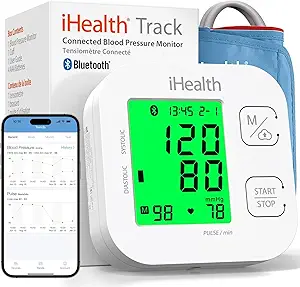
The blood pressure cuff we got is easy to use. You put the cuff on the pALS and turn it on. We don’t use this as often. We used it for a televisit appointment which was convenient.

Thermometers

Thermometers are basic. We have both mouth and forehead thermometers. We prefer the mouth thermometer because it seems more accurate. Our home health nurses use a forehead thermometer. We recommend you find what works for you and stick with it. This will be the best way to identify issues.

Scale

So, how do you weigh someone who is not able to stand on a scale? By using a hanging scale like you would use for a deer or a side of beef.

Steve was losing a lot of weight during his first few years with ALS. When he was confined to his power chair, we could get his weight at the ALS Clinic using a drive on scale. This can only give us an approximate weight because of the chair.
Sheila found this scale which works great. We attached it to our overhead lift. Now, every time he transfers to the chair from the bed, we can get Steve’s weight. This should work on a Hoyer lift, but we have not tried it yet.

Breathing is required to live. Steve had a steady decline in his FVC % through all stages of the disease. If we did not make the decision to have the tracheostomy, Steve would likely have died in early 2025. Besides ventilation, there are many supporting tools required to support breathing.

Astral 100 – Ventilator

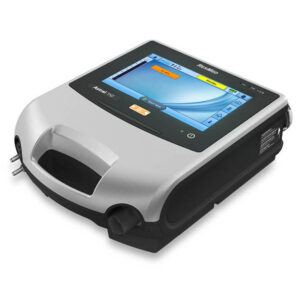
Once Steve’s FVC fell below 50%, he was prescribed a noninvasive ventilator (NIV). He was issued an Astral 100. We found this ventilator easy to use and manage. Steve started using this primarily at night. When he struggled to breathe more, he would use it periodically throughout the day. He would get his breathing “fix” or reset.
 
Eventually, he used it more during the day. He would take it off to eat and brush his teeth. Through his decline he found ways to work, present, and record videos. He also walked both of his daughters down the aisle. By late 2024, he was on the NIV 24 hours a day. He consumed a lot of energy and brain power focused on breathing. This huge amount of stress went away when he got his tracheostomy.
 
We bought an external battery and carry case through someone in an ALS group. This battery gave us more security as we traveled around. The carry case made it easier to hang on the power chair. Overall, we were very happy with the Astral system.

Cough assist

We used this cough assist machine while Steve was still using his NIV. We used it twice a day to help Steve keep his lungs clear. The first time we used it, Sheila cracked up laughing at how Steve looked while he was using it. It added some humor to our lives. We also used it if Steve felt he needed it more like during allergy season.
 
Steve worked with our respiratory therapist to dial it in. It is important for you to know the numbers. During one of Steve’s hospital stays, they used it with the wrong settings, and it was very uncomfortable for him. We got the settings matched up and were good to go.

Little Sucker oral and nasal suction device

Since Steve’s tracheostomy, he can no longer blow his nose. He has dealt with seasonal allergies his entire life, so this is a problem. We tried using a mouth yankauer, but it was too big for Steve’s nose even though Steve has a big nose. Not to mention it was a little gross.
 
Our respiratory therapist brought us one of these to try. They work great to clean out Steve’s sinuses. We have not sucked his brains out, yet. Our respiratory therapist orders them for us but Sheila found similar ones online. it connects to the tubing of our suction machine and clears his sinuses and helps with drainage that causes coughing.

Mouth yankauer, mouth suction

Yankauers are used to suction saliva, mucus, food, and other muck out of your mouth. They are similar in function to what your dentist uses. The most common type is made of rigid plastic. These work fine but are uncomfortable when used to clear stuff out of the back of the mouth.
 
We were introduced to a version that was made of less rigid plastic and has a soft tip. Steve likes this one much better. Sheila likes the protective cover on this model. Occasionally, he needs to remind his caregivers to pull the cover back. This leads to a fun situation where he asks for mouth suction but refuses to open his mouth until the cover is pulled back.
 
These yankauers have been hard to find. Sometimes we find them on Amazon. Lately, we had to search various DME suppliers for them. Our normal DME supplier does not carry them, so we pay for them out of our own pocket.

Suction machine

We got our suction machine around the same time we got our NIV. At the beginning, we used it sparingly. As Steve’s abilities to swallow and breathe continued to diminish, we used it more frequently. We now use it regularly. This machine works well with his tracheostomy.
 
The suction machine is very helpful when brushing his teeth. When he could not brush his own teeth anymore, he also couldn’t spit very well. The suction machine made it easier for him and his caregivers.

VOCSN – Ventilator

When Steve got his tracheostomy, we were concerned about how much equipment we would need to travel with. We were very happy to get a VOCSN.
Ventilator
Oxygen
Cough
Suction
Nebulizer
 
This all-in-one Ventilator has been great. It reduces the amount of equipment we need. We still use our other suction machine because it is bigger than the one on the ventilator. The oxygen feature has a concentrator so it can produce oxygen and can use external oxygen. We have an external concentrator we use when Steve is in bed. When we are on the move, we use oxygen and suction on the VOCSN.

Backup power is essential when your basic needs like breathing require a machine. Most of the equipment we use has battery power like our ventilator and our lifts. The onboard power is usually sufficient but typically only lasts 4 – 8 hours depending on usage. But we wanted to be prepared for power outages and travel.
 
We had a situation where Steve’s NIV ran out of battery power at an event. We were able to get it plugged in, but it was going to take hours to charge before we could go home safely. Friends and family jumped into help. Our friends got us the Ryobi battery solution and our son in law brought our large generator from home about an hour away. We got home safely, and the importance of backup power was reinforced.

Large generator

We knew we needed to be prepared for a power outage as Steve’s dependence on Ventilation increased. Whole house generators are quite expensive. We also wanted something we could travel with. The generator we chose can power appliances and has wheels with a pull-out handle. We can travel with it in our van. It powered the NIV and Steve’s laptop from Kentucky to Minnesota without issue. This also gave us backup power at the hotel.
 
One other note, this generator works as a power strip. All of Steve’s equipment is plugged into it so if we have a power outage his ventilator continues to work.

This generator also comes with solar panels. This will give us additional time on the generator in the case of an extended power outage.

Small generator

After Steve’s tracheostomy, we discovered that the new ventilator required more power than the Ryobi batteries could handle. We made the decision to get a smaller generator. The advantages were more power than the batteries and more portable than the large generator. It runs the ventilator and the Tobii device for over 7 hours and can be hung on the back of Steve’s power chair.

Ryobi battery system

We used this battery system as backup power for the NIV initially. When it no longer worked with Steve’s ventilator, we kept the batteries for other backup needs such as laptop and phone charging. We also bought the camping addon which includes a fan and flashlight. We have used the flashlight during power outages. We use the fan to keep Steve cool. We have used it during the power outage and on the Walk to Defeat ALS.

Ventilation Backup Power Estimates

VOCSN

0

Large generator (2048 watts)

0

Small generator (1000 watts)

0

VOCSN detachable batteries

0

VOCSN internal battery

0

Ryobi inverter with 4-amp battery (150 watts)

0

Total time on battery

Estimates are based on using 1 liter of oxygen. Wattage estimate: 250-300.

Astral 100

0

Large generator (2048 watts)

0

Small generator (1000 watts)

0

Astral external battery

0

Astral internal battery

0

Ryobi inverter with 4-amp battery (150 watts)

0

Total time on battery

We did not have the small generator when we were using the Astral. Wattage estimate: 90 – 100.

Bathroom support tools give Steve more independence in the bathroom or are needed when he is more or totally dependent on his caregivers.

Portable bidet

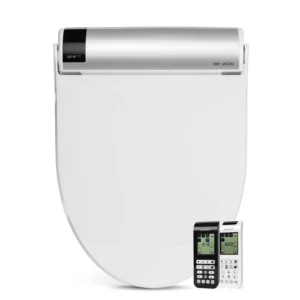
One of our home improvements was getting bidets in our bathrooms. However, we could not travel with these. Sheila found this one on Amazon. It is preferable to just using flushable wipes, less of a mess and less likely to plug the toilet. We used this portable bidet to clean Steve up while we traveled.
 
This bidet is battery operated and very compact. We are very happy with this bidet.

Shower chair

This shower chair is one of our highly used tools. In the middle stage of Steve’s progression, we used this a lot as part of our morning routine. We would move Steve to the bathroom to get his teeth brushed, hair combed, sponge bathed or showered, and dressed. As he experienced more bowel movement issues and struggled to sit on the toilet, we started using it for toileting. In the late stage, he uses it for bowel movements and showers, though not at the same time.
 
One issue with the chair is that it is uncomfortable. It hurts his butt. We tried a couple of options and like this one the best.

Toilet riser

We used a toilet riser when we traveled. Steve struggled to stand up if his hips were below his knees. This helped him be independent a little longer.

Tub transfer bench

As Steve’s legs became weaker, he had difficulty stepping into the bathtub to take a shower. This was further complicated by the nearly complete loss of his arm strength. After a couple of times catching his feet on the tub’s edge on the way in and out of the tub, we asked for suggestions at one of our ALS clinic visits. In response they ordered a tub transfer bench that was covered by our insurance.
 
This bench allowed Steve to sit down and safely slide into the bathtub. We would continue to use the bench after our bathroom remodel. We now have a zero-entry shower. No bathtub. Steve used bench to sit on while Sheila washed him up. The bench was necessary during the time Steve was losing his leg strength.
 
The tub transfer bench is a medical device. It is not a piece of loaner equipment, but it should be covered by your insurance.

Urinals

We started using urinals after one of Steve’s hospital stays. The nurses showed us how to use it with Steve while he was in bed. We would eventually use it while he was in the wheelchair.
 
The biggest issue for Steve was the edge around the opening. The typical urinals you find on Amazon have “sharp” edges and are very uncomfortable. Steve was even cut once or twice in his groin area which was very unpleasant. As a result, Sheila went searching for an alternative and found these blue urinals which have a smooth edge. If you are using urinals, we highly recommend these.

Sleep is critical for your health. These tools help Steve access his bed and sleep better.

Alternating pressure mattress pad

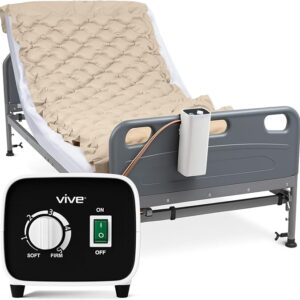
When Steve came home from the hospital, he developed a bed sore. We looked for a solution for the bed that did not require turning Steve throughout the night. The alternating pressure mattress pad works for us. We even took it to the hospital which made the stay more comfortable for him.

Bed wedge

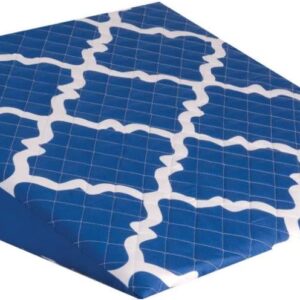
When traveling, we used this bed wedge on hotel beds. Steve needed this to support his breathing while using his NIV. We do not need it at home because we have an adjustable bed.

Call button

While using the NIV, Steve had difficulty communicating what he needed at night. This call button gave him the ability to use his feet and legs to alert his caregivers when he needed something. This allowed them to sleep with less worries about missing Steve’s needs. The call button is very sensitive, making it perfect for those of us with limited mobility.

Boots, heel protection

I sleep with boots on.
 
One issue for those of us who cannot move in bed and sleep on our back is pressure sores. Steve experienced his first pressure sores or rather the start of them during one of his hospital stays. The nurses fitted him with cushioned boots. These boots helped immediately and are very comfortable. They also came with wedges to keep his feet straight. This greatly reduced any pain in his ankles or calves caused by his feet being in an awkward position.
 
We got the boots we have from our local hospital. They left the boots on Steve during his transfer to his primary hospital. The second hospital wanted to use their own boots and we kept the originals. We recommend you ask about any supplies used during your stay. You may be able to keep them.

Keeping everything we need organized is difficult. The number of tools, supplies, medicines, and other items to support Steve is huge. Sheila is always looking for organizational tools to keep the clutter down and to make things easier to find and use.

Over-door organizer

The over-door organizer is a godsend. Sheila cleared the clutter from Steve’s dresser, two shelves, and a bedside table. It has made things easier to find. A place for everything and everything in its place.

Verified by MonsterInsights