Getting around

Through out the progression of ALS, we use a variety of tools for moving and transferring. The goal is to get around the house and the world. We don’t want to be stuck.
The ability to keep moving is a big deal. This not only includes wheels but also tools that support the rolling.

When Steve started having difficulty walking, we borrowed a walker from Sheila’s mom. It is a very nice walker that doubles as a seat which helps with fatigue. The walker specifically helped Steve support his arms when he walked. We only used the walker for a few months.


We decided to buy a Go Chair to give Steve the ability to get around easier. It breaks down into four parts for easy transport. We also traveled with this chair through airports with the ability to go to the airplane door. This is the chair we used on our trip to Disney. Steve really liked the chair.
Please be aware of the following. We did not use insurance for this chair. We were correctly advised to wait. Insurance only covers one chair every five years. If you are interested in a similar chair, we recommend contacting Team Gleason. They have loaner chairs available.


We now use a Permobil power chair. We used a loaner chair for a couple of months to learn what works for us. This helped our mobility tech order the chair that fits our needs. We experimented with different seat cushions and controls. Steve is happy with the power chair.
How you control your power chair is a combination of ability and preference. By the time Steve got his chair, he had lost his ability to use his arms and hands. He never had the opportunity to use the joystick.


Steve started using chin control with his Permobil power chair. He was able to use it but found it exhausting. He really did not like it in front of his face. This is a good option if you don’t have use of your hands or feet, but you can still move your head.

Even though Steve could not walk, he was able to move his feet and legs. We gave foot control a trial run. He fell in love with this option. It works just like a joystick. He was able to drive and control his chair easily with the foot control. Steve also used it as a Bluetooth mouse which lengthened his ability to work.

After Steve’s feet could no longer use the foot control, we pursued the Ability Drive which would enable Steve to control his power chair using his Tobii device. We tried it out and liked it. The only real issue is that it doesn’t work well or at all outside. Our Ability Drive system was covered by insurance.
We accessorized our chair to make the chair more comfortable and functional.

Early on, we were trying to find good ways to mount Steve’s Giraffe Cup and his cell phone on his power chair. Ram Mounts have a good wheelchair mounting solution. Because they specialize in auto and truck mounts, the mounts are stable, and they work well on a wheelchair. The base can be mounted on the arm with a few screws. We thought the cell phone holder worked well and would recommend it. The cup holder did not work as well.

We got an umbrella that worked for both chairs. We have used the umbrella for rain and sun protection.
Transfer support is needed through multiple stages of ALS. Transfer tools are very important for caregivers. They enable caregivers to safely move their PALS and limit the risk to themselves.


We worked with Kentucky Vocational Rehabilitation to get this lift system.
We use an overhead lift for all our regular home transfers. This includes transfers between the bed and the shower chair, between the bed and the power chair, and between both chairs.
The overhead lift system is made up of two primary components, the lift and the track. The lift is a two-point, battery powered Handicare P-440 capable of lifting 440 pounds. It has an attached remote control (ours did not work correctly). Apart from the remote, it has worked well. Knowing what we know now, we would get a lift with four points. (Points are clips or hooks used to connect the sling.) That would make it easier to put the sling on the lift and Steve finds it more comfortable.
The second part of the system is the track. Our track system is NOT permanently installed in the ceiling. Ours has two legs that use compression to fix them into position. This allows the track to be moved and there is no damage to the room. It also does not require any tools.


The MoLift is a battery powered, mobile lift. This lift folds up and is designed for easy transportation. We use it when we travel. Sheila can move this lift around fairly easy. This lift is also used as a backup at home if we have issues with the ceiling lift. Because it is battery powered, it is easy to operate.
We worked with Kentucky Vocational Rehabilitation to get this lift system.

A manual Hoyer Lift is typically a pump action machine (like an engine hoist) used to lift a person using a sling. Ours was sent to us by our insurance company. It seems to be the “lowest cost option” not the best option. It is heavy and large, making it difficult to use and navigate in tight spaces. It does the job. We have kept ours as a backup.

Slings. Finding the right sling is a process involving comfort, safety, and ease of use. We received many slings that were included with the lifts. We currently do not use any of them. When we researched slings early on, we decided on a six-point sling with split legs. The six-point sling has two loops at the legs, hipslower back, and shoulders. This was comfortable for Steve. The split legs allow access to go to the bathroom and for the cleaning required. When Steve could not support his head any longer, we changed to a sling with head support including two more straps.
We purchased both slings on Amazon. We also returned a few that did not work. You can check out the two we have used by clicking the buttons below. Remember, take the time to learn about slings and try them out. Find the sling that is right for you.
One other recommendation is to take the sling with you to the hospital and clinic visits. If it is already in place on your chair, they will use it. This makes it easier for hospital staff and more comfortable for you.

We got a transfer bench from the ALS clinic. We only used it a couple of times to transfer between our Go-Chair and a toilet. We struggled to use it well.


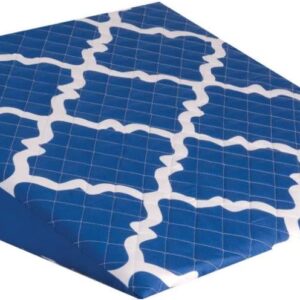
Before Steve lost his ability to walk, he struggled to stand up from a seated position. He was able to use this lift assist cushion or seat. He calls it an “ejection seat” because it feels like it launches you out of your seat. Steve used this at church, at the dining room table, at the theater, and the nail salon which leads to a funny story.
Steve got manicures when he could no longer cut his own nails. It was a good time to spend with Sheila while getting pampered. During one of our visits, Steve was getting his nails done and using the ejection seat on the chair. He leaned forward and the cushion launched him into the table. It startled everyone and scared Steve. The nail techs helped Steve get resituated. They were very nice and helpful.
Lesson learned. If you use one of these ejection seats, be sure the tension is set up correctly and don’t lean forward unless you are ready to stand up.